
Raising seed funding is your battlefield. It’s the first serious step between having an idea and turning that idea into a viable company. If you’re a new founder, you’re likely wondering what exactly you need to know to succeed at this stage. We’ve stripped it down to the essentials—no fluff, just mission-critical intel to help you navigate seed funding like a seasoned warrior.
What Is Seed Funding, Really?
Seed funding is the capital you raise to get your startup off the ground. It’s called the “seed” round because it’s meant to plant the roots of your business. You use this money to build your MVP (Minimum Viable Product), hire initial team members, conduct early marketing experiments, and prove that your idea has traction.
Unlike later-stage rounds, seed funding is more about your vision, your team, and your ability to execute than actual numbers. There may be initial revenue, or there may be none. Seed investors are betting on you more than your profits.
Sources of Seed Funding
Multiple streams can fuel your seed round, and knowing where to look is half the battle. Here’s a quick rundown of who’s writing checks at the seed stage:
- Angel Investors: Wealthy individuals who invest their own money.
- Venture Capital (VC) Firms: Some VCs have dedicated seed-stage funds.
- Accelerators and Incubators: Think Y Combinator or Techstars—they invest small amounts and offer guidance and connections.
- Friends and Family: Don’t overlook your inner circle. Just be clear about risks.
- Crowdfunding: Equity crowdfunding platforms let anyone invest in your startup.
When Should You Raise Seed Funding?
One word: timing. Raise too early and you’ll struggle to justify your valuation. Wait too long and you risk burning out resources before gaining traction. Here’s how to know when it’s go-time:
- You’ve validated the problem and have a clear, compelling solution.
- Your product development roadmap is defined, and you can show some progress (early users, prototypes, etc).
- You can clearly articulate your target market and value proposition.
- You and your co-founders are ready to go all-in.
Don’t raise just because you can. Raise because the capital will get you from point A to point B faster and with more firepower.
How Much Seed Capital Should You Raise?
This isn’t a trick question, but the answer varies. Generally, seed rounds range from $500,000 to $2 million. But what’s right for you depends on your burn rate (how fast you spend money), your milestones, and your runway (how long you can survive before needing more capital).
A practical approach: Calculate how much money you need to reach the next major milestone (like product-market fit or $X in revenue), add in 20% buffer, and go from there. Always raise what you need, not what looks good in headlines.
Pre-Seed vs. Seed: What’s the Difference?
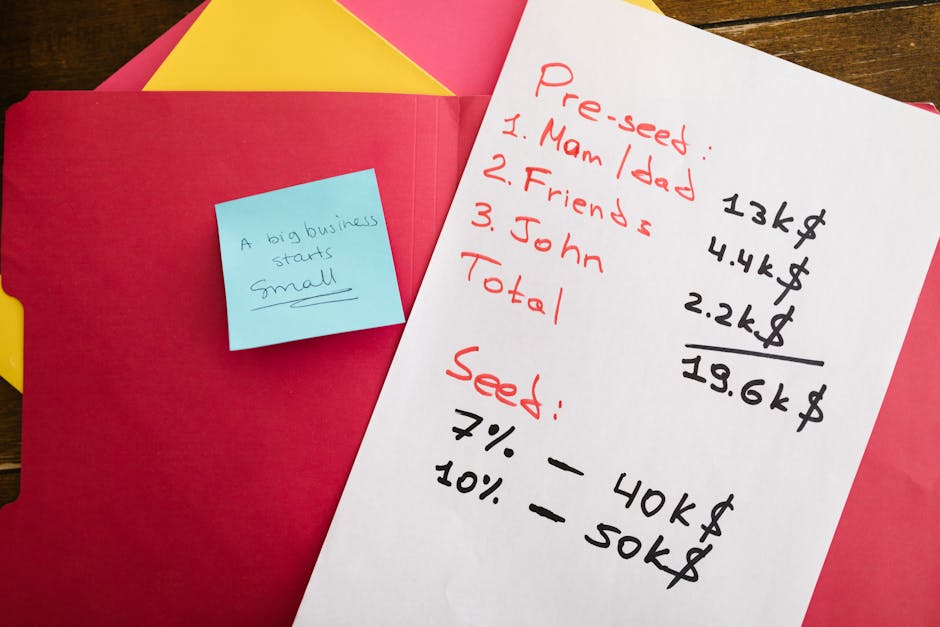
Pre-seed is the sandbox. It’s when you have a concept, maybe a pitch deck, and are trying to validate your startup idea. Seed is when you’ve done enough groundwork and are ready to build or grow.
At the pre-seed stage, the check size is smaller, and the risk is higher for the investor. But don’t get caught up in labels. Focus on the progress you’ve made and what you need next to keep momentum alive.
Crafting a Solid Pitch
Your pitch is your war cry. You’ve got to make it powerful and quick to the point. Investors hear hundreds of pitches. Make yours stand out. Here’s what to include:
- Problem: What are you solving and why does it matter?
- Solution: How do you solve it differently or better?
- Market: Who are your customers? How big is the opportunity?
- Traction: What proof do you have that people want this?
- Team: Why are you the right people to build this?
- Financials: What are your current and projected metrics?
- Use of Funds: How will the money be spent?
Don’t rely too much on slides. Investors back people more than decks. Be prepared to answer questions without the crutch of your presentation.
Seed Fundraising Terms to Know
Take five minutes to know these terms. They could save you from painful mistakes down the line.
- Convertible Note: A debt that converts into equity later, often at a discount.
- SAFE (Simple Agreement for Future Equity): A simple document that allows you to raise money without setting a valuation.
- Valuation Cap: The maximum company valuation at which your investors will convert their investment into equity.
- Discount Rate: The percentage discount SAFE or note holders receive when converting to equity.
- Equity Round: You sell shares of your company in exchange for investment, using a defined company valuation.
Due Diligence: What Investors Look For
This is their recon mission. They want to know if you’re legit. Here’s what they review during due diligence:
- Company registration and legal documents
- Cap table (who owns what)
- Financial models and actuals (if any)
- Customer or user data
- Your backgrounds and résumés
Get your house in order before you go looking for cash. Nothing screams “amateur hour” like a founder who can’t whip up a clean cap table.
The Equity Equation: How Much Should You Give Away?
Seed rounds often translate to 10–25% equity given up to investors. That’s a lot. But remember—you’re trading equity for fuel. Don’t obsess about dilution early on. Instead, focus on building enough value so future rounds are raised at much higher valuations.
Pro tip: Leave room on your cap table for employee equity (usually 10-15%). You’ll need strong talent, and equity is your best currency in the early days.
Common Mistakes to Avoid When Raising Seed Capital
Every warrior falls. Fewer fall twice. Here are some missteps to dodge:
- Raising too much too soon. Don’t overextend yourself and dilute your cap table with unnecessary funding.
- Undervaluing your company. Investors won’t correct you upward. Know your worth and back it up.
- Ignoring legal structure. Not having the correct company setup or ignoring intellectual property rights can cost you big.
- Talking to the wrong investors. Cast a targeted net. Not every investor cares about your industry. Do your homework.
- Lack of follow-up. Don’t ghost. Keep potential investors in the loop with updates.
Final Thoughts: Get Battle-Ready
Seed funding isn’t about chasing checks—it’s about amplifying potential. Your goal is to raise just enough capital to hit the next milestone harder and faster. Be clear, be confident, and be concise. Show momentum. Show grit. And above all, show that you and your team are the people who can turn vision into victory.
Your seed round is just the beginning. But if you get this part right, the rest of the journey gets a lot less bumpy. Now go raise some capital and build something phenomenal.